You’ve probably stood at a fragrance counter in the mall or a perfume store and picked up two bottles of the same scent and noticed one labeled EDT while the other EDP and wondered why one costs more but what most people don’t realise is that these aren’t just packaging variations the concentration level changes not only how long a scent lasts but sometimes how it smells different entirely and in this guide you’ll learn exactly what EDT, EDP, and Parfum mean and how they compare across five key dimensions and how to choose the right one for every occasion, season, and budget.
Table of Contents
Key Takeaways
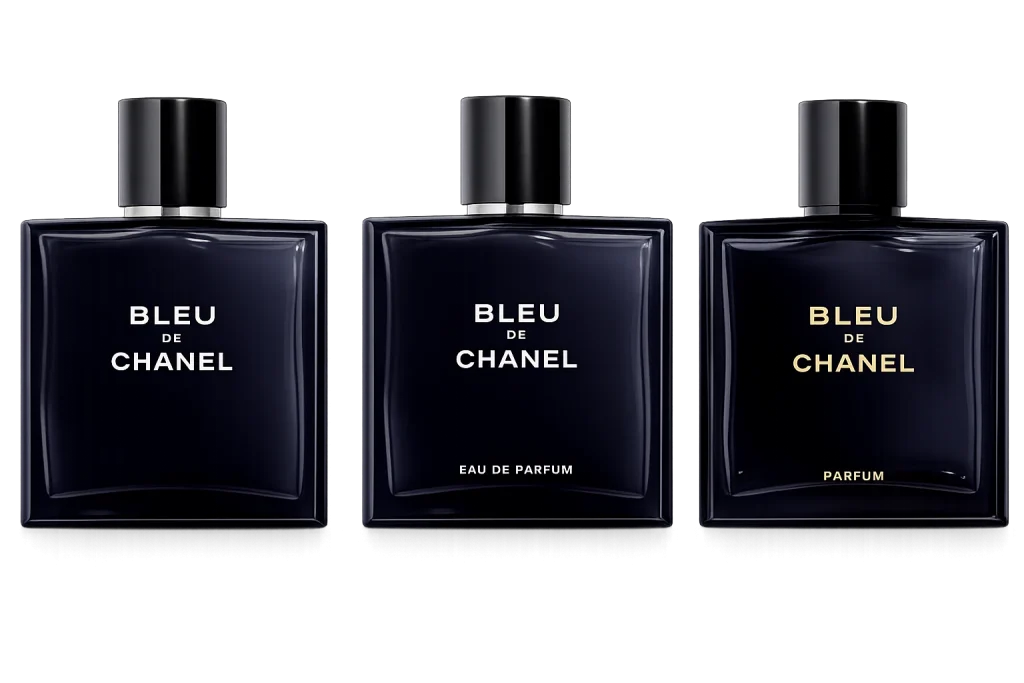
- Fragrance concentration, which is the ratio of perfume oil to alcohol is what separates EDT, EDP and Parfum, which directly determines how long a scent lasts and how strongly it projects.
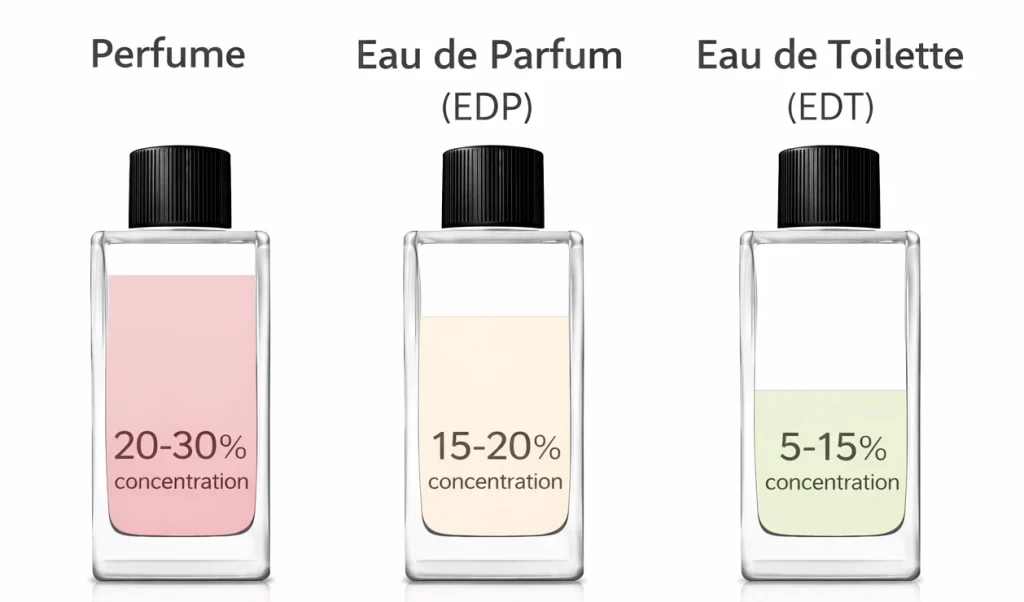
- Eau de Toilette (EDT) contains 5–15% fragrance oil making it the lightest of all the three and it is best suited for daytime wear, warmer climates, and casual or office settings.
- Eau de Parfum (EDP) contains 15–20% fragrance oil and lasts approximately 4–8 hours, offering a richer more layered scent experience ideal for evenings, cooler seasons, formal occasions and a more versatile scent.
- Parfum (Extrait de Parfum) is the most concentrated tier at 20–40% fragrance oil with the longest longevity (8–12+ hours) and the most intimate projection also the highest price point.
- Higher concentration ≠ better smell formulas can differ significantly between EDT and EDP versions.
- No single concentration is universally superior — EDT, EDP, and Parfum each serve a distinct role in a well-rounded fragrance wardrobe.
What Is Fragrance Concentration and Why Does It Matter?
Fragrance concentration is the percentage of perfume oil diluted in alcohol (sometimes in water as well) and it determines how strong, long-lasting, and expensive a fragrance is. It is the single most important factor determining how a fragrance performs on your skin, so when you see “EDT,” “EDP,” or “Parfum” on a bottle, you’re reading a concentration classification, a standardised way of communicating how much pure perfume oil is packed into that formula.
Think of it like espresso vs Americano smell, the core flavour DNA is the same and what changes is the dilution ratio, which changes the intensity, the duration and even the character of what you experience. In perfumery, that dilution ratio is called the fragrance concentration percentage representing the aromatic compounds as a share of total volume.
So this concentration directly impacts performance and higher oil concentration means slower evaporation, stronger scent presence, and longer wear time and it also affects cost. For example, perfumes with higher oil content are more expensive because they use more raw materials and last longer.
Quotable insight: Fragrance concentration controls not just longevity but how a scent evolves from fresh top notes to deep base notes.
Why Does Fragrance Concentration Matter When Buying Perfume?
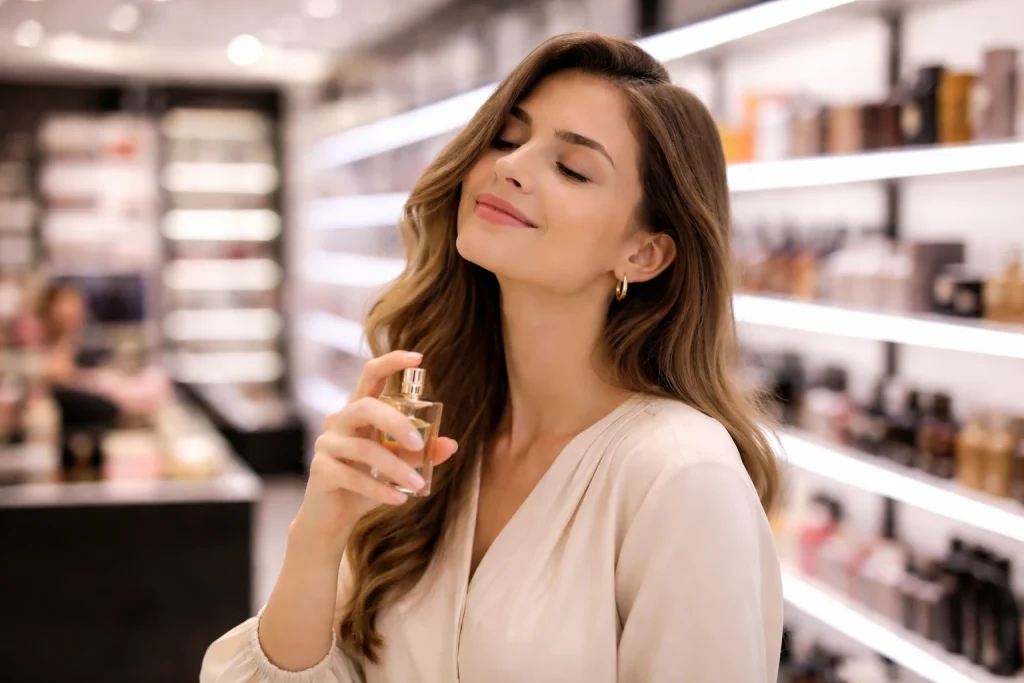
Higher fragrance oil concentration directly increases longevity, projection, and price. A higher percentage of aromatic compounds means more molecules are available to slowly evaporate off your skin over time, which extends wear. It also intensifies the scent trail you leave in a room, known as sillage and how far the fragrance radiates from your body, known as projection.
For example, a 5% EDT may last 3—4 hours and project lightly around you while a 30% Parfum can cling to your skin and clothing for 12+ hours or more. That performance gap has real-world implications and a light EDT at a summer brunch is elegant the same choice at a six-hour winter wedding reception might leave you feeling under-dressed scent-wise by the fourth hour.
What Is Eau de Toilette (EDT) and When Should You Wear It?
Eau de Toilette (EDT) is a fragrance classification containing 5–15% fragrance oil concentration, designed for lighter, fresher wear that typically lasts 3–5 hours on skin and It is the most widely produced and commercially available concentration tier, accounting for the majority of mainstream fragrance releases globally.
Characteristics of EDT
EDT are fresh and airy and they emphasize top notes like citrus, bergamot, and aquatic accords, they are less intense and more versatile. For example you can wear EDT to the office without overwhelming others.
EDT are more budget-friendly compared to higher concentrations.
Best Occasions for EDT
- Daily wear
- Office environments
- Summer and hot climates
- Gym or casual outings
For example, a fragrance like Dior Sauvage EDT opens with a bright burst of bergamot that feels energetic and clean.
Quotable insight: EDT is designed for refreshment, not endurance.
What Is Eau de Parfum (EDP) and What Makes It Different from EDT?
Eau de Parfum (EDP) contains 15–20% fragrance oil concentration, offering a richer, more layered scent experience with a longevity of approximately 4–8 hours making it suitable for all seasons and any occasions. EDP is the fastest-growing concentration tier in prestige perfumery, driven by a consumer shift toward value-per-wear and the rise of fragrance culture.
Where EDT leads with a bright, immediate top-note impression, EDP formulas give heart and base notes the time and volume to fully develop. You’ll encounter more prominent florals, spices, woods, and resins in an EDP not because those materials aren’t present in the EDT version but because the higher oil concentration means they have more staying power on skin.
Does an EDP Smell the Same as the EDT Version?
The same fragrance in EDT and EDP versions is not simply “louder or quieter” the note balance can be genuinely different and this is one of the most widely misunderstood facts in consumer perfumery that when a house releases both an EDT and EDP of the same fragrance, the perfumer often deliberately reformulates the concentration to suit the oil level adjusting the prominence of certain notes to perform optimally at that concentration.
Dior Sauvage EDP, for instance, reads as warmer, more vanilla-spiced, and more intimate than its EDT counterpart — not just louder. The lavender and ambroxan are still present, but the Sichuan pepper and elemi resin carry more weight. It is the same DNA expressed in a different register. This matters enormously if you’re comparing bottles at a counter or shopping online.
Best Occasions for EDP
- Evening outings
- Dates and social events
- Cooler seasons
- Long workdays
For example, Dior Sauvage EDP feels warmer and slightly sweeter compared to the EDT version.
What Is Parfum (Extrait de Parfum) and Is It Worth the Price?
Parfum, also known as Extrait de Parfum, is the most concentrated fragrance classification at 20–40% fragrance oil, providing the longest wear time and typically 8–12 hours or more and the most intimate and skin-close projection. It also represents the purest expression of a perfumer’s vision with so much oil and comparatively little alcohol, the fragrance unfolds slowly and stays close to your body rather than radiating outward into a room.
Characteristics of Parfum
Parfum is deep, rich, and luxurious. It emphasizes the base notes like high-quality oud, musk, amber and other ingredients. It has low projection but high longevity, which stays close to your skin and it’s the most expensive due to high oil concentration.
Best Use Cases for Parfum
- Signature scent collectors
- Special occasions
- Winter and cold climates
- Formal events
Is Parfum Worth the Investment?
Whether Parfum is worth its premium price depends entirely on the occasion, the formula, and the wearer’s priorities. For special events like a winter wedding, a milestone anniversary dinner or a black-tie evening. The longevity, depth, and singular character of a Parfum can be genuinely transformative. For daily office wear or casual use, the investment is rarely justified.
EDT vs EDP vs Parfum: How Do They Compare on Longevity, Projection, and Price?
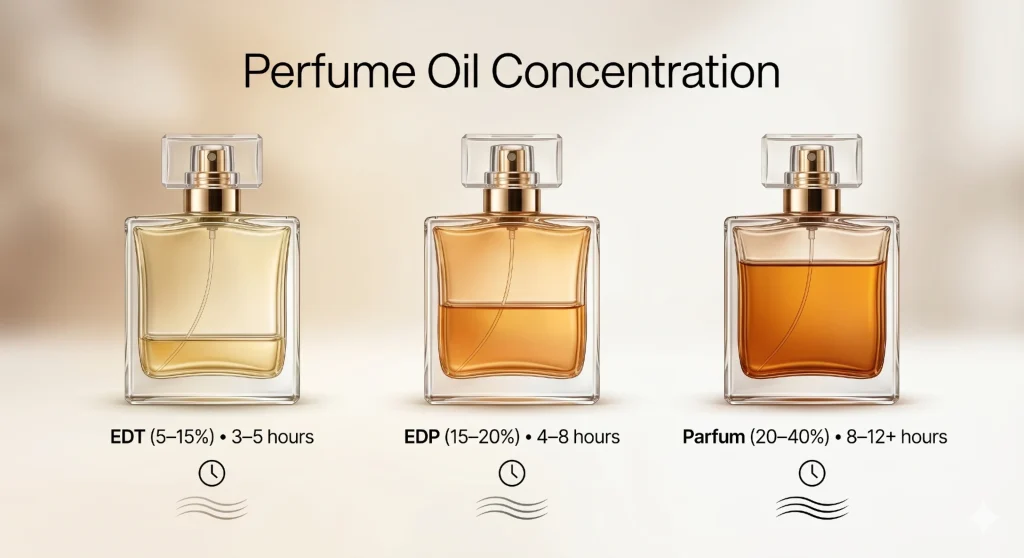
The three fragrance tiers differ systematically across five key dimensions: concentration, longevity, projection, price, and best occasion and the table below provides a direct side-by-side comparison.
| Feature | EDT | EDP | Parfum |
|---|---|---|---|
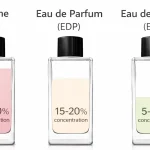
| Fragrance oil % | 5–15% | 15–20% | 20–40% |
| Longevity on skin | 3–5 hours | 4–8 hours | 8–12+ hours |
| Projection / Sillage | Light to moderate | Moderate to strong | Intimate / skin-close |
| Typical price (100ml) | $20–$200 | $50–$350 | $50–$800 |
| Best season | Spring / Summer | Summer /Autumn / Winter | Winter / Special occasions |
| Best occasion | Daily / Office / Casual / Gym | Daily / Evening / Formal / Travel | Special events / Luxury wear |
Which Fragrance Concentration Is Best for Summer vs Winter?
Choosing between EDT, EDP, and Parfum doesn’t have to be complicated often, the weather alone can guide you also temperature plays a huge role in how a fragrance performs on your skin, affecting how strong it feels and how long it lasts.
In simple terms, heat makes fragrance louder and shorter-lasting, while cold makes it softer, smoother and longer-lasting. That’s why the same scent can feel completely different in summer vs winter.
During summer, EDT becomes your best friend, the heat naturally boosts its light, fresh character, so even a subtle fragrance projects well without trying too hard. For example, a citrus-heavy EDT that might feel mild in winter suddenly feels vibrant and alive in 35–38°C weather.
Most of the EDPs are suitable for all weather/seasons. But the weather cools down in autumn and winter, EDP starts to shine. The cold air tones down lighter fragrances but an EDP is richer composition holds its ground and it stays noticeable, a little warm and inviting even outdoors. This is also the season where deeper notes like spices, woods, and amber feel more natural and comforting rather than heavy. (Note: you can wear most of the EDP fragrance which have citrus, fresh and marine notes).
Then there’s deep winter or special evening occasions that’s where Parfum feels just right Instead of projecting loudly, it stays close to your skin, creating a subtle almost personal scent bubble. In cold weather with layered clothing and this kind of intimate presence feels luxurious rather than quiet.
At the end of the day, it’s not about which concentration is better. It’s about matching your fragrance to the environment, and when you do that even a simple scent can feel perfectly good & balanced.
How Does Skin Type Affect How Long EDT, EDP, and Parfum Last?
Skin type significantly influences fragrance longevity and understanding your skin chemistry helps you choose the right concentration of the perfume. Dry skin lacks the natural oils that help fragrance molecules bind to the surface, causing scent to evaporate faster than on oilier skin types.
People with dry skin often benefit from choosing one concentration tier higher than they might otherwise select. If an EDT disappears from your skin in two hours and an EDP may be the practical solution not because the formula is superior, but because your skin chemistry demands more aromatic material to achieve the same performance a naturally oily skin would get from the lighter version.
Moisturising before application is a widely recommended technique: applying an unscented lotion to pulse points before spraying creates a base layer that fragrance molecules can adhere to, extending longevity across all three concentration tiers.
How Should You Apply EDT, EDP, and Parfum for Best Results?
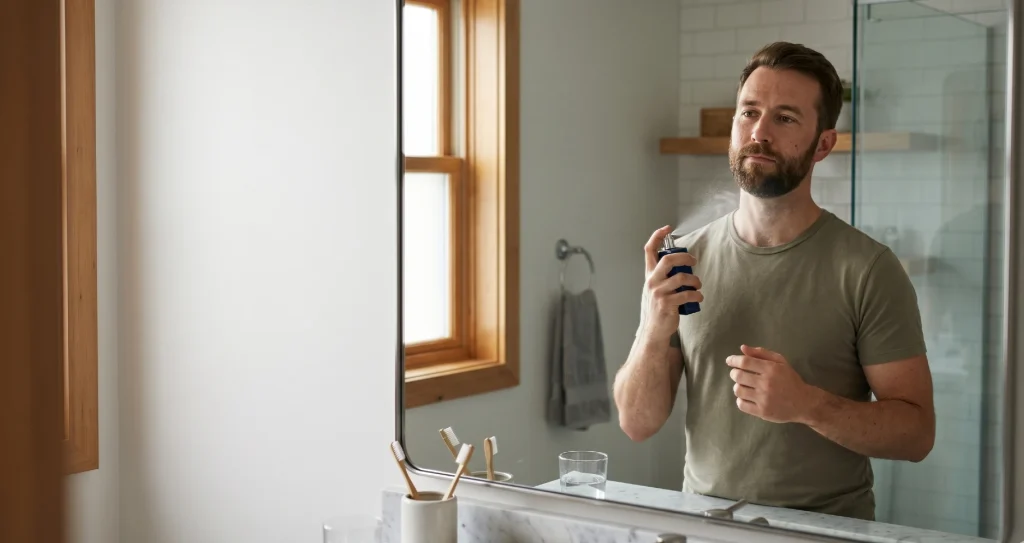
Application technique varies meaningfully across concentration tiers, and using the wrong technique with the wrong concentration is one of the most common reasons people feel their fragrance underperforms.
Applying fragrance correctly maximizes performance and ensures balanced projection.
Application Tips
Parfum: Use a maximum of 4-5 sprays on your skin and clothes, it’s more than enough.
EDT: Spray 7-9 times on pulse points and clothing.
EDP: Use 2-4 sprays on pulse points and 2-3 on clothes.
What Are the Most Common Myths About Perfume Concentration?
Several myths about fragrance concentration lead buyers to make poorly matched purchases and addressing them directly saves money and prevents disappointment.
Myth 1: Higher concentration always smells better. This is false, quality in fragrance comes from the quality of the raw materials and the skill of the perfumer’s formula, not from the oil percentage. A beautifully composed EDT using premium naturals will outperform a mediocre Parfum every time, so concentration controls performance, not artistry.
Myth 2: EDP is just a stronger version of the EDT. As discussed earlier, EDP and EDT versions of the same fragrance are often genuinely different formulas and not simple dilutions of each other. Buying both versions of the same scent is not redundant, as they can serve entirely different occasions and emotional registers.
Myth 3: Parfum is always worth the price premium. Context determines value, for someone who wears fragrance daily to a casual office, a high-volume EDT at a fraction of the cost delivers better value per wear. Parfum earns its premium at high-stakes occasions where longevity, depth and luxury positioning are worth paying for.
EDT vs EDP vs Parfum: Which One Should You Buy First as a Beginner?
For a first fragrance purchase, Eau de Parfum is the most balanced entry point for the majority of wearers. It offers enough longevity and richness to be noticed and appreciated without the cost or application precision of a Parfum, and it covers more occasions than an EDT and Parfum alone.
That said, the ideal beginner strategy is to own one EDT for daily rotation and one EDP for occasions. An EDT in a fresh, clean profile (citrus, aquatic, or light woody) handles mornings, office days, and casual outings efficiently, and an EDP in a warmer, richer profile (spiced floral, amber wood, or creamy musk) covers all weathers, evenings, cooler months, and events where you want your fragrance to be remembered.
Parfum, for most beginners, is best explored after you’ve identified a specific fragrance you love deeply in its EDP form and want to experience at its most concentrated and most intimate expression.
Conclusion
Choosing between EDT, EDP, and Parfum is not about finding the best perfume option it is about matching the right concentration to the right moment. EDT concentration is a light, versatile everyday tool. EDP is the richer, more considered choice for occasions that deserve more. Parfum is the luxury of restraint, intimate, long-lasting, and worn with intention.
Frequently Asked Questions About EDT vs EDP vs Parfum
What is the difference between EDT, EDP, and Parfum?
The difference between EDT, EDP, and Parfum lies in their fragrance oil concentration which affects the longevity, projection, and intensity.
EDT contains 5–15% oil and lasts 3–5 hours, EDP contains 15–20% and lasts 4–8 hours, while Parfum contains 20–40% and can last 8–12+ hours.
Which is better EDT, EDP, or Parfum?
No single fragrance concentration is universally better and it totally depends on your needs, environment, occasion, and personal preference.
For example, EDT is ideal for daily wear, EDP works well for versatility, and Parfum is best for special occasions.
Does EDT smell different from EDP?
Yes, EDT can smell different from EDP because perfumers often adjust the formula, not just the strength.
For example, EDT versions emphasize fresh top notes, while EDP versions highlight deeper and smooth base notes.
Does EDP last longer than EDT?
Yes, EDP lasts longer than EDT because it contains a higher percentage of fragrance oil.
For example, EDP typically lasts 4–8 hours, while EDT lasts around 3–5 hours on an average.
How does skin type affect fragrance longevity?
Skin type affects fragrance longevity because dry skin absorbs fragrance faster while oily skin retains it longer.
For example, people with dry skin often benefit from using EDP or Parfum.
How many sprays should I use for EDT, EDP, and Parfum?
The number of sprays depends on concentration and desired projection.
EDT: 7–9 sprays
EDP: 2–4 sprays on skin and 2–3 on clothes
Parfum: 4–5 sprays on skin and clothes.
What is Eau De Parfum
EDP stands for Eau de Parfum, a fragrance type with 15–20% perfume oil concentration and It offers a richer scent profile and longer longevity, usually lasting 4–8 hours.
What is Eau De Toilette
EDT stands for Eau de Toilette, a fragrance type with 5–15% perfume oil concentration and It is designed to be light, fresh, and suitable for everyday wear, typically lasting 3–5 hours.
What is Parfum (Extrait de Parfum)
Parfum, also called Extrait de Parfum, is the most concentrated fragrance type with 20–40% perfume oil and it provides the longest wear time (8–12+ hours) and a more skin-close scent experience.